
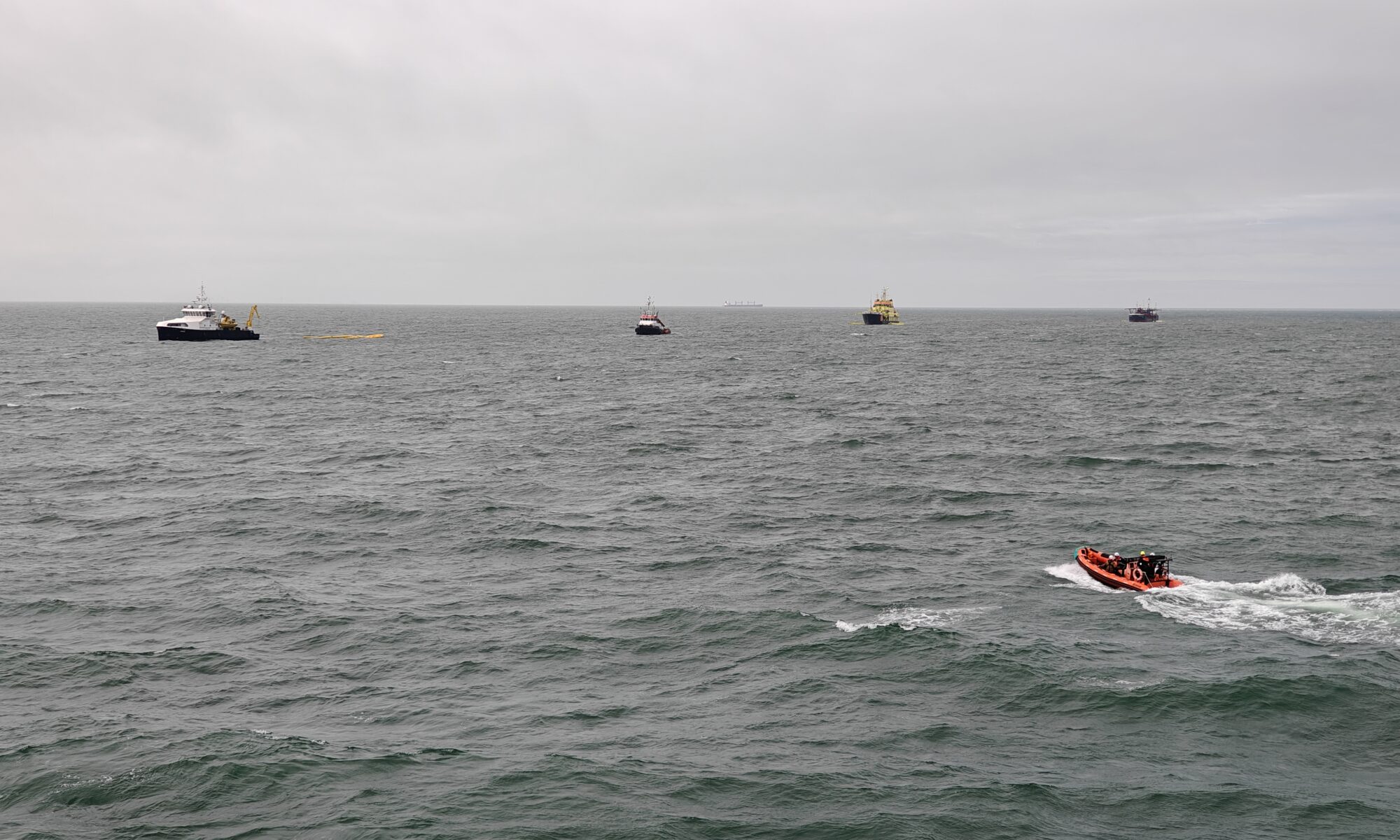
On Wednesday, June 17, a large oil spill response exercise took place off the coast of Zeebrugge, in the presence of Minister for the North Sea Annelies Verlinden. The exercise tested how Belgium and its partners respond to a serious oil spill at sea. According to the scenario, a large oil slick was discovered about 7 nautical miles (12 km) from the coast. The goal was to clean it up quickly, before it reached vulnerable nature reserves such as the Zwin and the Scheldt estuary, and to limit disruption to the ports. Instead of oil, straw was used, which behaves similarly at sea.
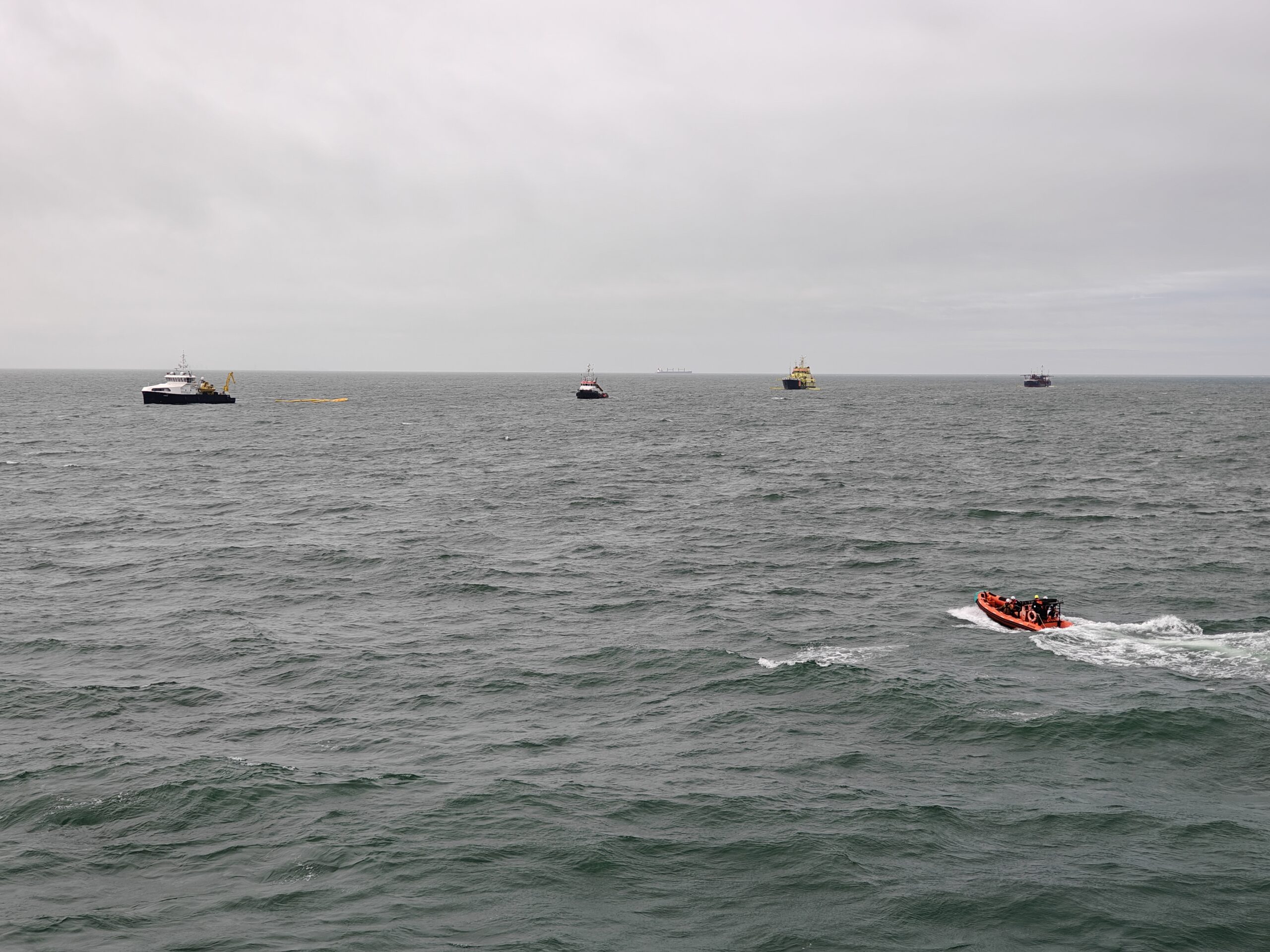
Belgian and foreign vessels
A total of seven ships participated in the exercise, including both Belgian and foreign specialized vessels. For example, the Arca took part, a ship belonging to the Dutch Rijkswaterstaat equipped with sweeping arms capable of collecting the oil. Belgium deployed the Zeetijger and the Sirius. These vessels from Vloot (Fleet; Agency MDK) can be equipped to clean up oil in the event of a major disaster.
The Interballast III also participated. This vessel, actually a dredger belonging to the Group De Cloedt, is deployed by the European Maritime Safety Agency (EMSA) during major incidents in the North Sea. This ship can also be equipped with sweeping arms to clean up oil. Furthermore, the vessel’s hold is heated so that the collected oil remains liquid and can be pumped out when the ship is full.
Cooperation between coast guard partners and countries
The oil spill response exercise was coordinated by the Marine Environment service of the FPS Public Health and carried out by Belgian coast guard partners in cooperation with Dutch and European organizations.
The Belgian Coast Guard is a cooperation network responsible for maritime tasks related to safety, surveillance, and assistance. 17 Flemish and federal government services and the Governor of West Flanders are part of the Coast Guard. By working together, the various services ensure that these tasks are carried out efficiently and in a well-coordinated manner in the North Sea. The Scientific Service ‘Management Unit of the Mathematical Model of the North Sea (MUMM)’ of the Institute of Natural Sciences is one of the federal partners and, in that capacity, also organizes the activities of the Belgian Coastguard aircraft.
The exercise took place within the framework of the Multipurpose Maritime Operation (MMO), an annual large-scale and multifunctional maritime operation in the North Sea, coordinated by the European Maritime Safety Agency (EMSA), the European Border Control Agency (FRONTEX), and the European Fisheries Control Agency (EFCA), with support from the European Union. Member states cooperate closely in this context on coastguard tasks such as maritime safety, environmental protection, and border surveillance.
International attention for BBNJ candidacy
The exercise was attended by Minister of Justice and the North Sea Annelies Verlinden, together with the Chair of the FPS Public Health, Food Chain Safety and Environment Dirk Ramaekers, Director General for the Environment Pierre Kerkhofs, and the Belgian Special Envoy for the Ocean Sophie Mirgaux Dillien. For the Institute of Natural Sciences, General Director Michel Van Camp and Operational Director Steven Degraer (Operational Directorate Natural Environment), among others, attended the event.
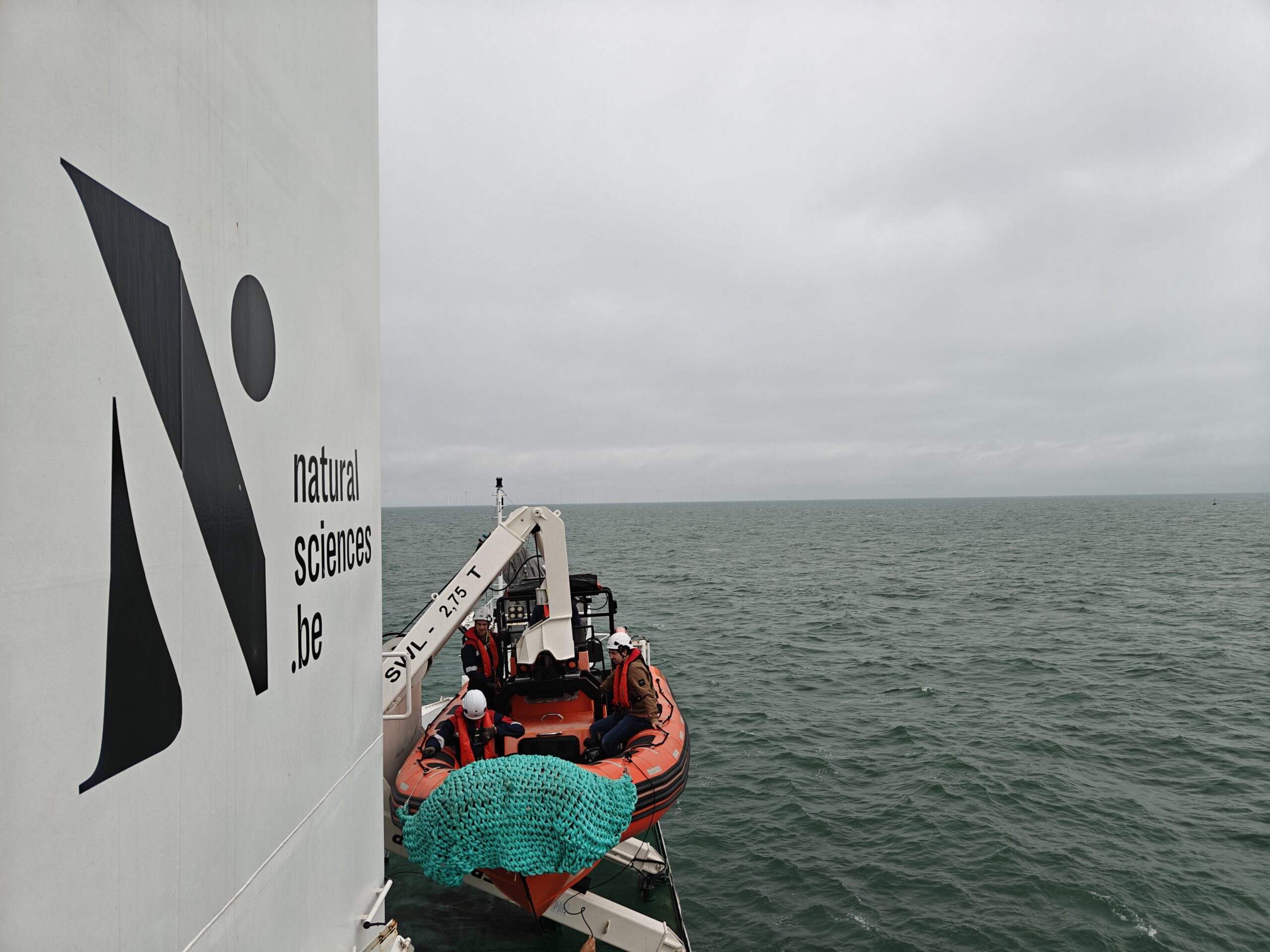
Their presence – aboard the research vessel RV Belgica – was part of the Belgian bid to host the secretariat of the Agreement under the United Nations Convention on the Law of the Sea on the Conservation and Sustainable Use of Marine Biological Diversity of Areas beyond National Jurisdiction (BBNJ Agreement). In the same context, several foreign diplomats also followed the exercise. The BBNJ Convention aims to better protect and sustainably manage biodiversity on the high seas, including through marine protected areas, environmental impact assessments, and agreements on the use of marine genetic resources.
Annelies Verlinden, Minister of Justice and the North Sea:
“The ocean does not stop at national borders, and neither does oil pollution. This exercise demonstrates how crucial cooperation is to protect the ocean. Belgium invests in equipment, capacity, and knowledge to keep the sea safe and clean, and in national and international partnerships. With its bid for the BBNJ secretariat, Belgium wants to use its expertise and connecting role to better protect biodiversity on the high seas.”
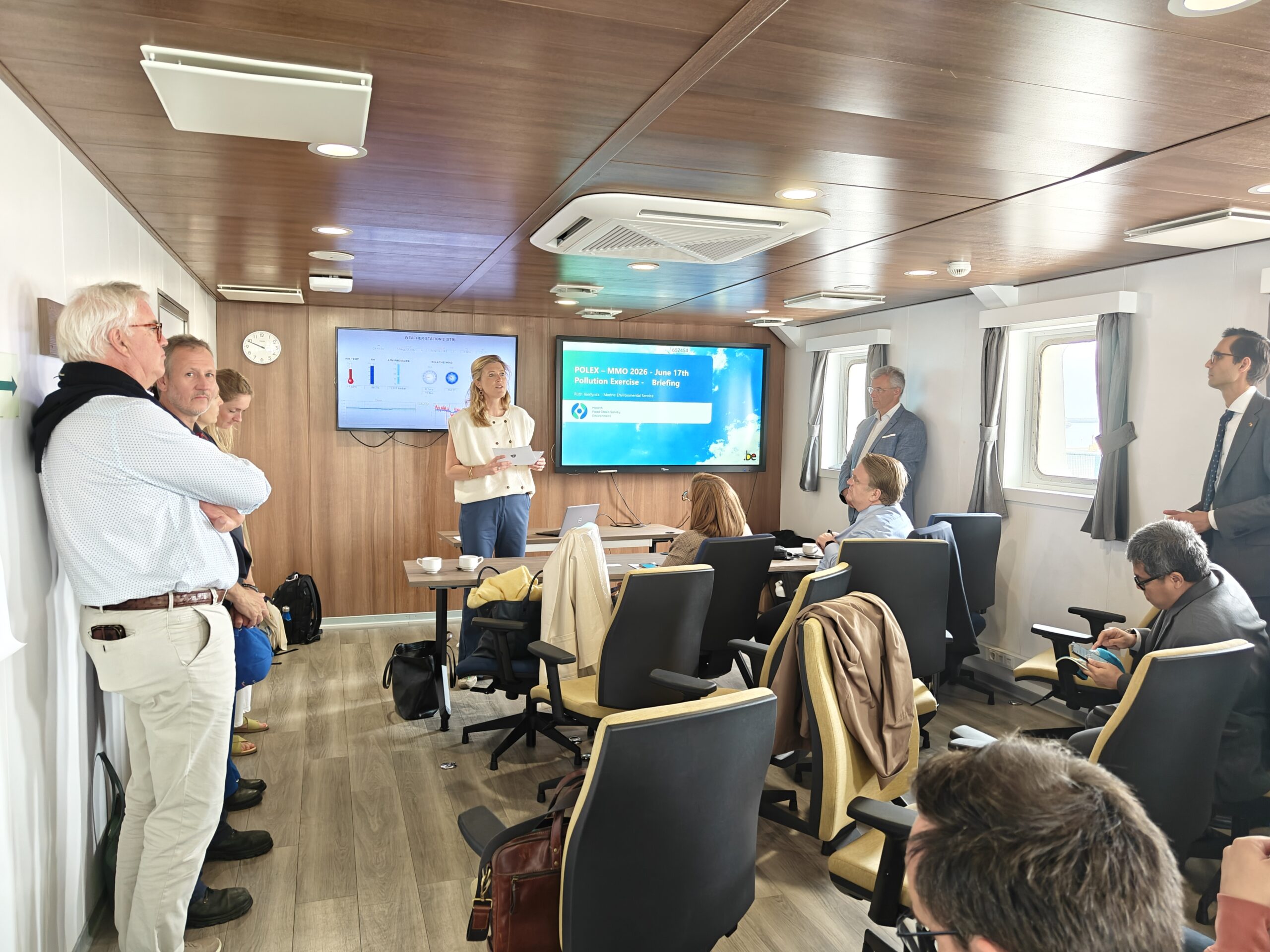
After the exercise: evaluation
Two weeks after the exercise, an evaluation will follow with all partners. We will then review what went well and what could be improved. The points for improvement will be integrated into the Oil Spill Response Intervention Plan.