
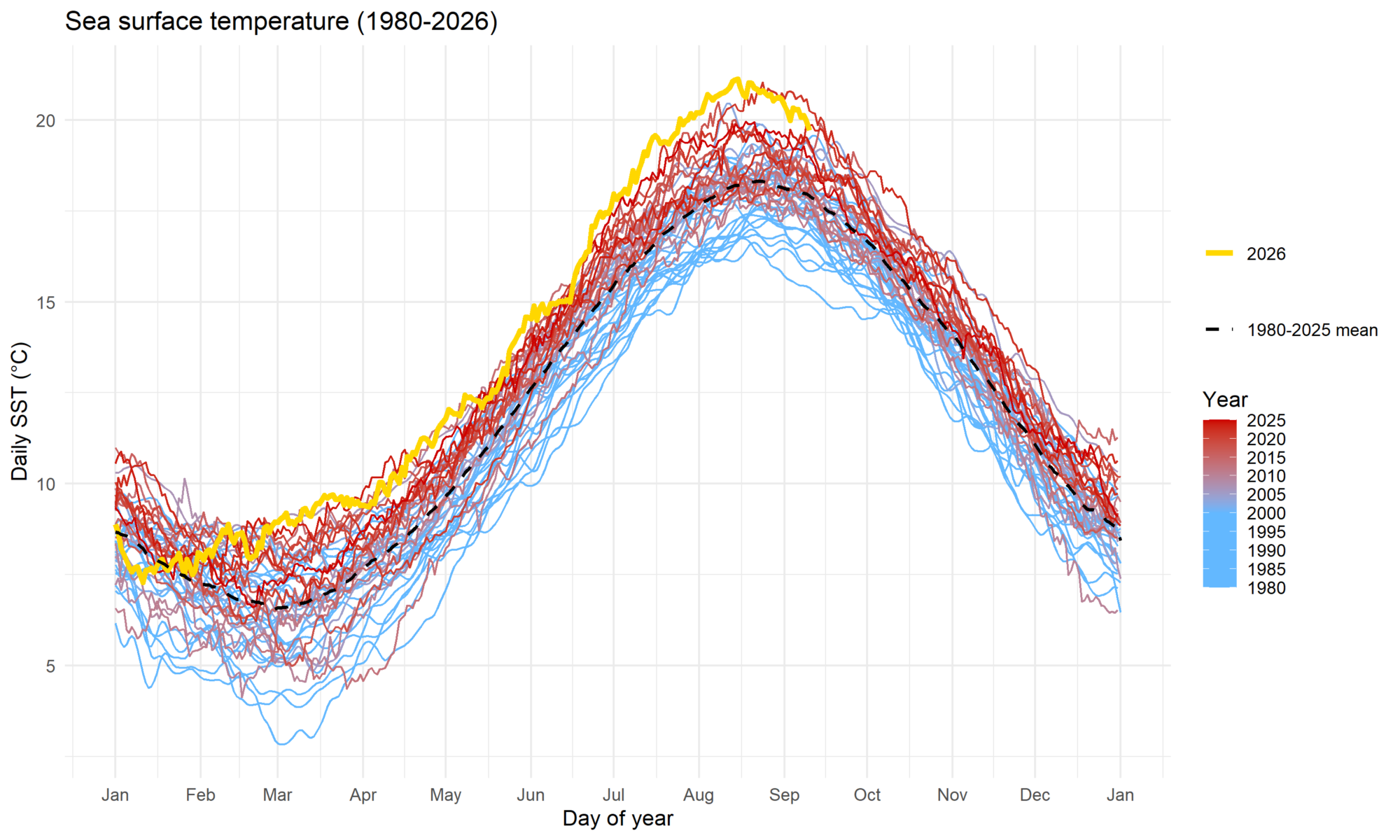
This summer, sea surface temperatures off the Belgian coast have been the highest recorded since at least 1980, according to data analyzed by the Institute of Natural Sciences . This persistent anomaly raises strong concerns among researchers about its consequences for marine ecosystems in the Belgian Part of the North Sea.
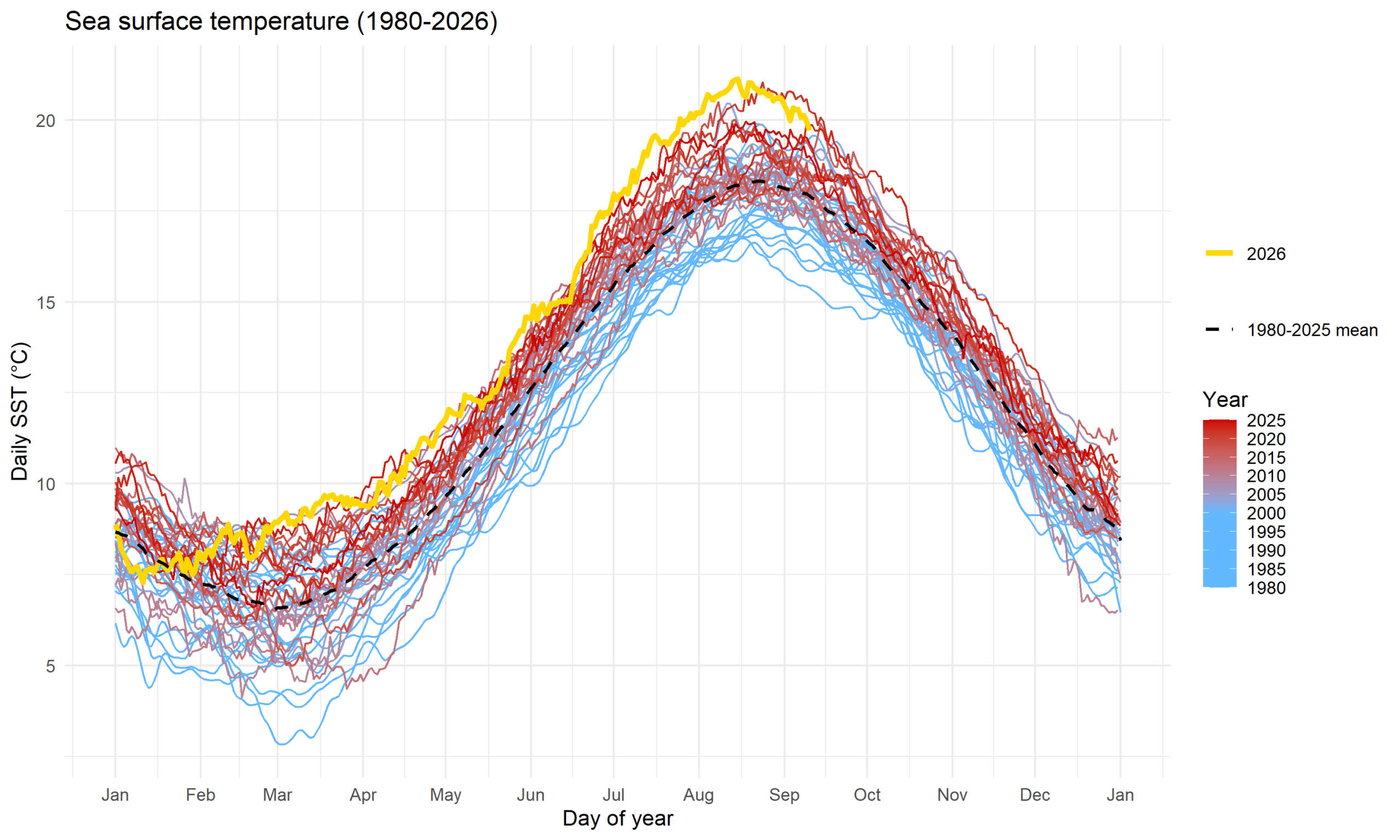
The recipe to detect Marine Heat Waves is precisely defined: consider the long-term sea surface temperature records at a specific location and identify the value that is only exceeded in 10% of the observations (that’s the 90th percentile). If your time series remains above this threshold for 5 consecutive days, you have spotted a Marine Heat Wave.
This summer, the temperature recorded in the Belgian North Sea exceeded this threshold, not for 5, but for 87 consecutive days, from June 16th to September 10th precisely, with sea surface temperature remaining not only above the 90th percentile threshold, but above its historical maximum for most of the period.
Such a heat wave is not simply exceptional; it is absolutely unprecedented, and it occurred with a suddenness and intensity that exceeds most expectations. In those conditions, the potential impact of this heat wave on the Belgian marine ecosystem is largely uncharted and concerning.
Potentially significant consequences for biodiversity
Temperature exerts direct control on biological metabolic rates. Underwater, temperature also directly sets the solubility of oxygen. This means that warm conditions make it at the same time more necessary and more difficult to breathe. Scientific literature documents that marine heatwaves induce thermal stress on benthic, pelagic, and planktonic species (both phytoplankton and zooplankton), shifts in the geographic distribution of populations, disruption of reproductive cycles, and an increased risk of proliferation by invasive or opportunistic species better adapted to warmer waters. Such events may therefore affect the entire food web, from biogeochemistry, to plankton communities to fish and marine mammals.
Researchers at the Institute of Natural Sciences monitor these phenomena as part of their work on marine biodiversity in the Belgian Part of the North Sea. In the frame of the RECAP and CodeBlue projects, the ECOMOD modelling team is engaged in producing long-term forecasts (1980-2100) to assess the combined impact of climate change and eutrophication on North environmental conditions.
The resulting datasets will be made available, to shed light, in combination with ecological monitoring, on the potential future of the North Sea marine ecosystem.