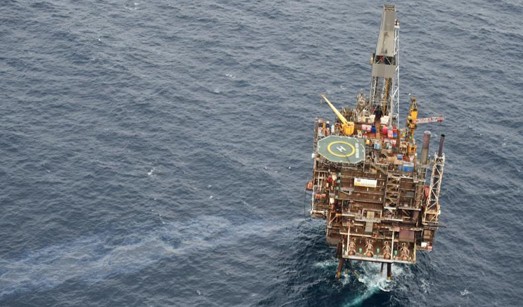
In 2025, the Institute of Natural Sciences documented 96 cases of marine and atmospheric pollution with the Coast Guard aircraft. 13 of these involved oil spills, while 5 concerned discharges of other harmful substances. In addition, 23 and 55 vessels respectively showed suspicious sulphur and nitrogen levels in their exhaust plumes. The remaining activities included, among others, flights carried out for broader maritime surveillance tasks in support of Coast Guard partners, fisheries inspections, and marine mammal surveys.
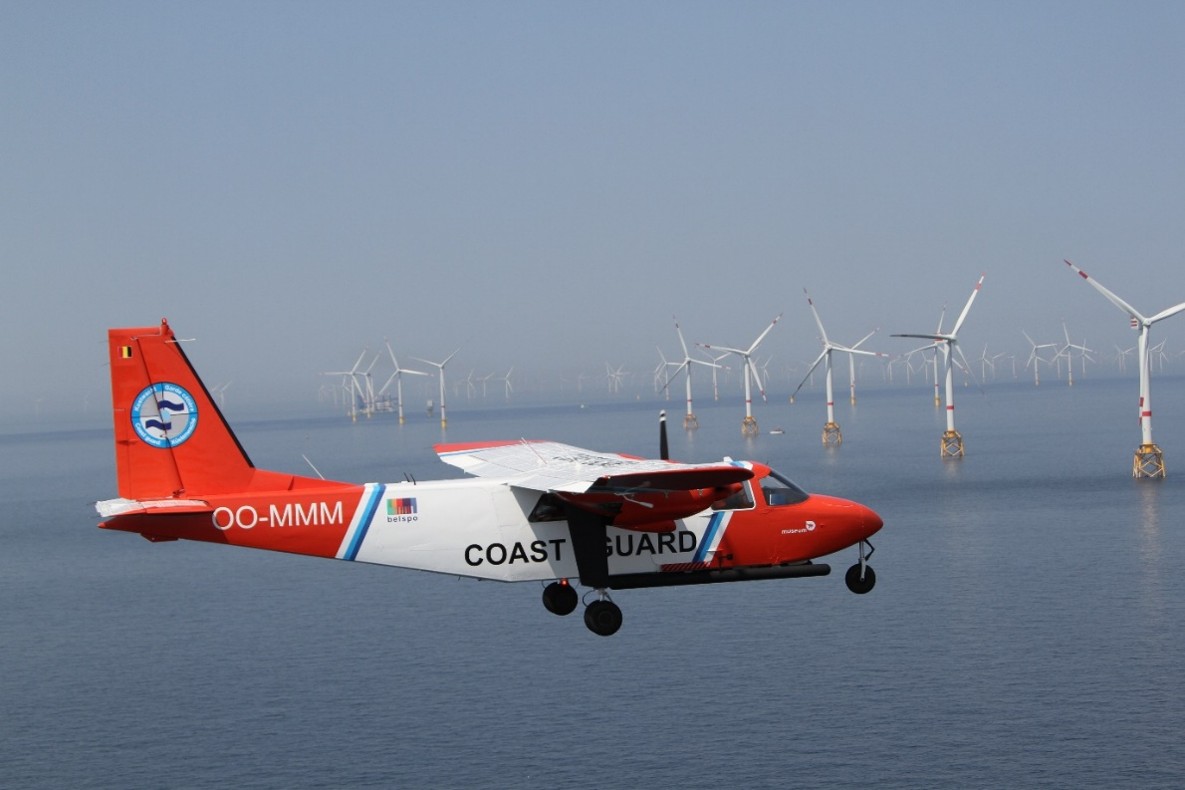
In 2025, the Belgian Coast Guard aircraft carried out 185 flight hours over the North Sea as part of the national aerial surveillance programme. This programme is organised by the Scientific Service “Management Unit of the Mathematical Model of the North Sea” (MUMM) of the Institute of Natural Sciences, in cooperation with Defence.
The majority of the flight hours consisted of national flights, totaling 145 flight hours. Of these, 135 hours were performed within the framework of the Belgian Coast Guard. Within these flights, 94 hours were dedicated to broader maritime surveillance: monitoring of discharges of oil, other harmful substances, and waste (45.5 hours, within the framework of MARPOL Annexes I, II, and V), monitoring of sulfur and nitrogen emissions by vessels (48.5 hours, with a view to enforcing MARPOL Annex VI), and fisheries control (35 hours, commissioned by the Flemish Fisheries Service). Aerial support was also provided during several marine pollution response exercises. The remaining national flight hours were spent on monitoring marine mammals (10.5 hours).
In addition, approximately 40 hours were dedicated to international flights under the framework of the Bonn Agreement. These concerned a Tour d’Horizon mission to inspect offshore oil and gas platforms in the North Sea (north to Norway and Scotland) and a multi-day campaign at the boundary of the Emission Control Area (ECA) off the coast of Brittany to monitor ship emissions at sea.
Ship discharges at sea
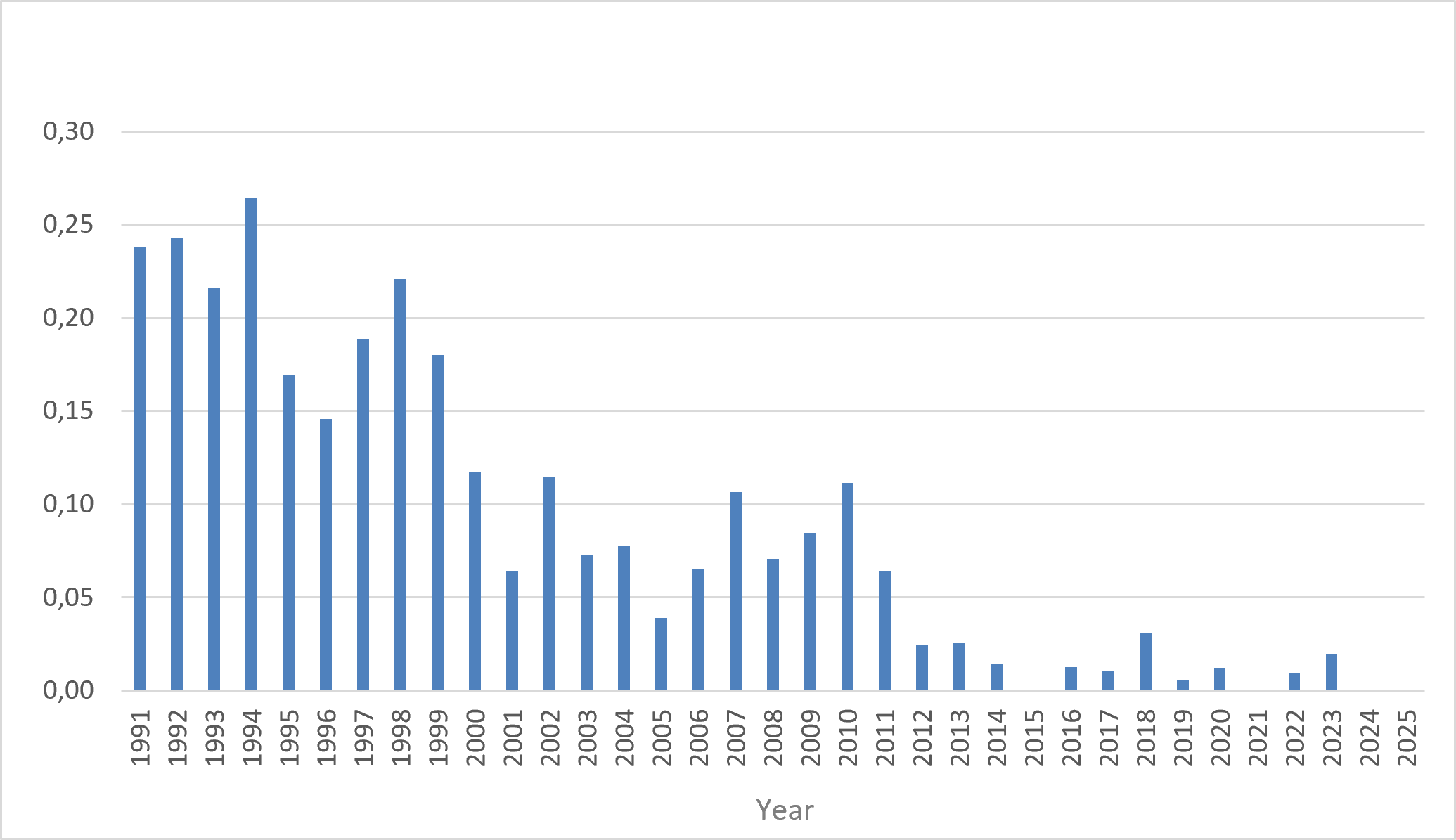
In 2025, no operational (= deliberate) oil pollution incidents were detected in the Belgian part of the North Sea. As a result, the downward trend of the past 35 years remains intact.
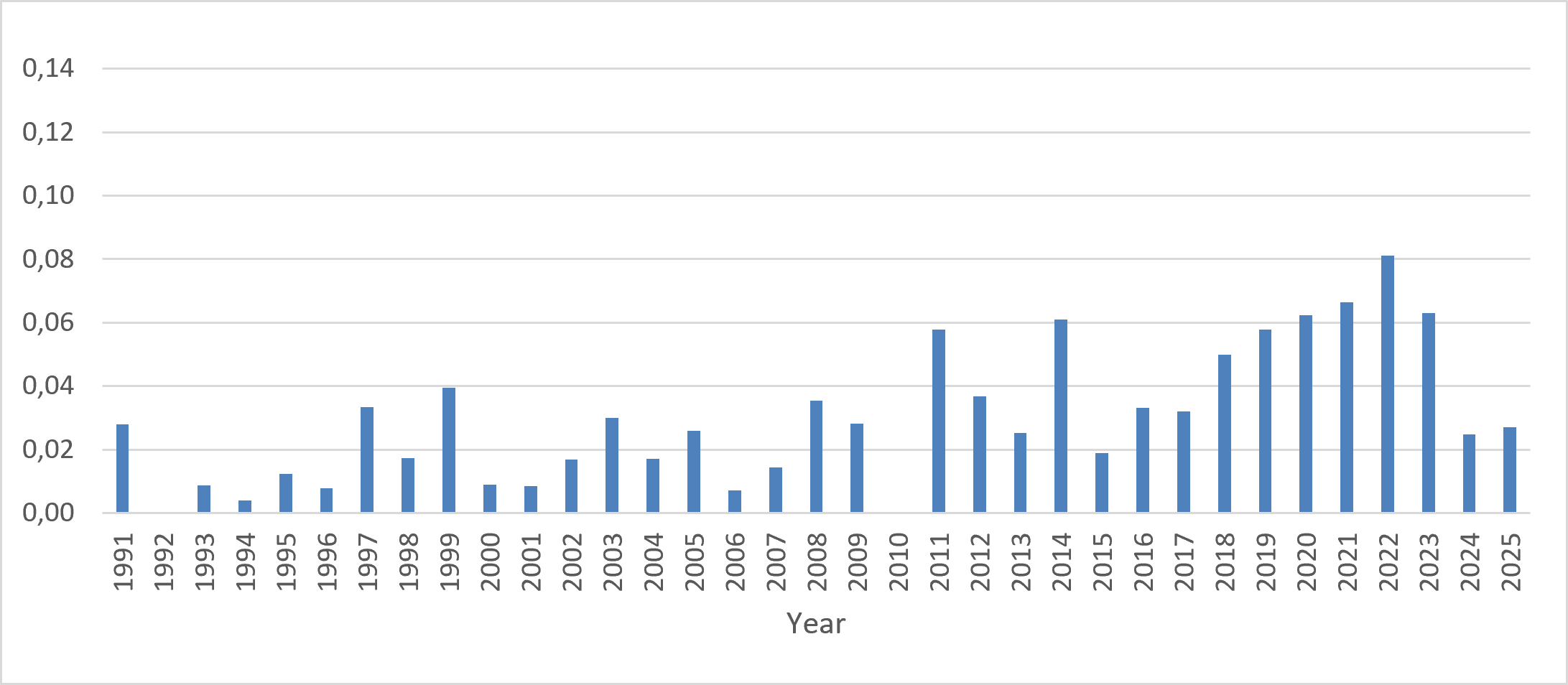
However, three cases of operational pollution with harmful liquids other than oil (MARPOL Annex II) were observed in the Belgian part of the North Sea, in each case without a polluter nearby. As a result, it was not possible to determine exactly which type of liquid, other than oil, was discharged into the sea.
Discharges of other harmful liquid substances remain a recurring issue. Until 2022, the number of observations appeared to show an upward trend. The slight decline recorded in 2023 continued in 2024 and appears to be holding firm in 2025. This may be related to stricter regulations concerning discharge standards for such substances, including the introduction in 2021 of strict discharge limits for so-called “Persistent Floaters”, such as paraffin-like substances. This appears to indicate an encouraging turning point.
Given the low probability of detecting offenders, the large annual fluctuations in the number of observations, and changes in the aircraft’s primary missions (with ship emission monitoring taking a prominent role), it is still too early to draw firm conclusions. The increase that was observable until 2022 was nevertheless also noticed by other North Sea countries. Although these discharges are often likely to be permitted, this does not mean they cannot negatively affect the marine environment, depending on their nature and quantity. It remains important for coastal states to continue monitoring these discharges. This maps potential problems at sea and forms a basis for adjusting international discharge standards where necessary.
There were no violations of MARPOL Annex V in 2025, which concerns the dumping of garbage and solid bulk materials from ships into the sea.
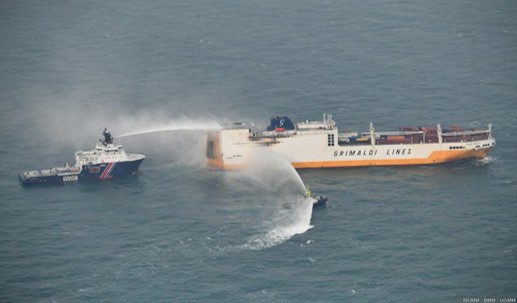
However, a fire was observed on board the vessel Grande Basile in British waters just beyond the border with Belgian waters. Additionally, a collision occurred in the Belgian anchorage area between the vessels Fuji Lava and Bow Explorer. Fortunately, neither incident resulted in accidental marine pollution.
Oil pollution in Belgian ports
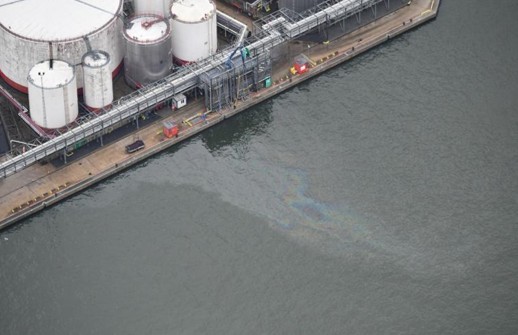
In 2025, two oil pollution incidents were observed in the port of Antwerp. On 10 March, the Coast Guard aircraft detected a weathered oil slick on the eastern side of the Southern Inlet Dock, with no polluter nearby. On 29 July, several oil slicks were observed in the 4th Dock. These detections were reported to the port authorities for further investigation.
Sulphur and nitrogen emissions
Belgium is recognised internationally as a pioneer in combating air pollution from ships at sea (MARPOL Annex VI), thanks to the use of a sniffer sensor installed on board the Coast Guard aircraft. This sensor measures various air pollutants in the exhaust plumes of ships.
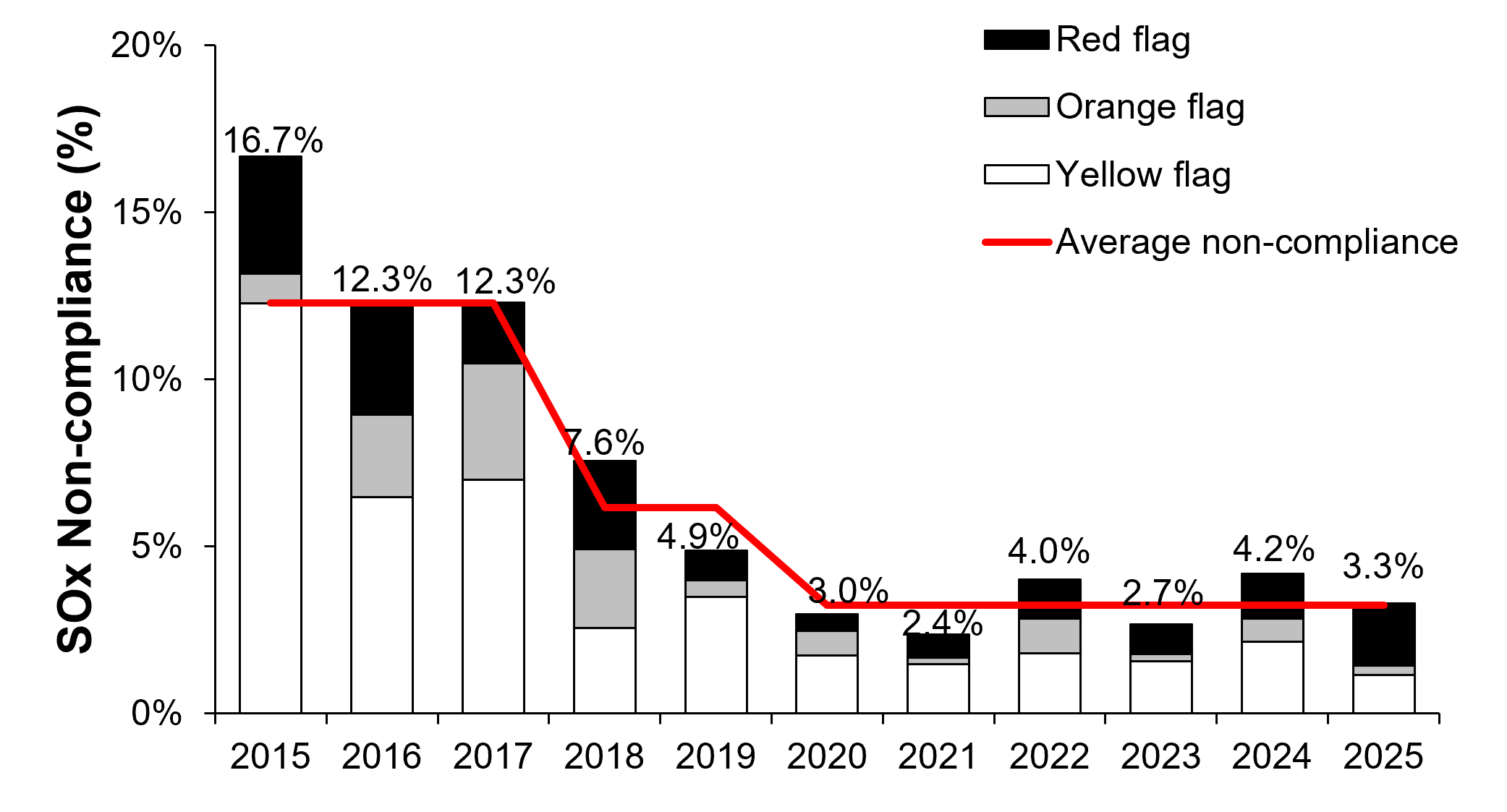
Sulphur measurements have been part of the programme since 2015 and aim to monitor compliance with the strict sulphur limits for marine fuels in the North Sea Emission Control Area (ECA). The results of the sulphur measurements carried out in 2025 show that 23 out of 731 inspected ships displayed a suspiciously high sulphur value. These suspicious vessels were reported to the competent Belgian and European maritime inspection authorities, which are responsible for further follow-up and port inspections. The proportion of ships with suspicious sulphur values has decreased significantly since 2015 and has stabilised at around 3% in recent years.
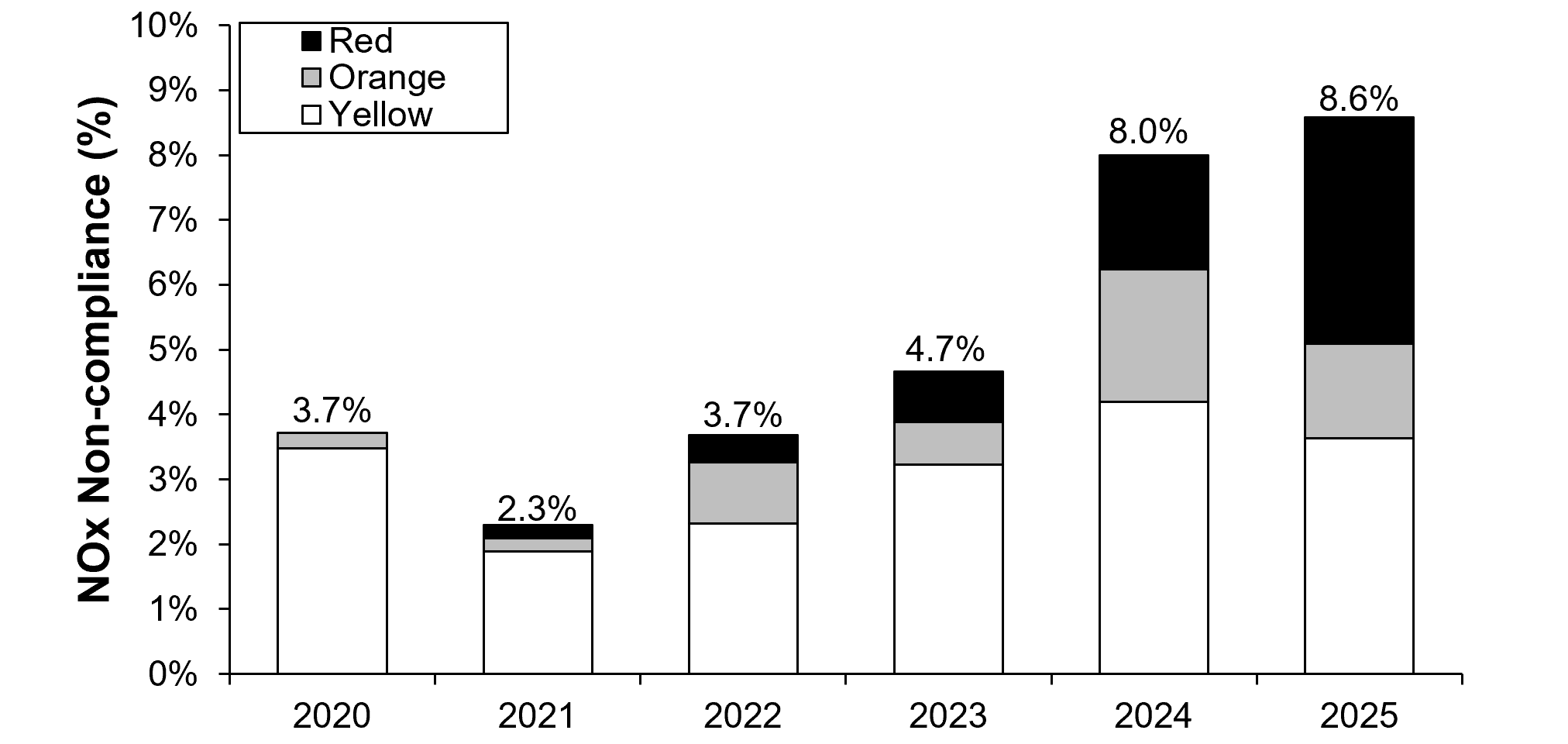
Since the addition of a NOx sensor in 2020, the aircraft has also measured the concentration of nitrogen compounds (NOx) in ship exhaust plumes. Since 1 January 2021, stricter limits have also applied to nitrogen oxide emissions in the North Sea ECA. In 2025, this resulted in the detection of suspicious NOx values in 59 of the 731 monitored ships. These vessels were also systematically reported to the relevant maritime authorities. The proportion of ships with suspicious NOx values has gradually increased since 2020, highlighting the need for continued monitoring of compliance with the ECA emission standards.
Black carbon emissions
In 2021, a black carbon (BC) sensor was added to the Coast Guard aircraft’s sniffer system. This makes it possible to measure black carbon emissions, an important component of fine particulate matter and soot, from ship exhaust. Between 2021 and 2024, individual BC emissions were measured from 886 ships. These measurements, carried out under real operating conditions at sea, show that ships in the southern North Sea and the English Channel emit considerably more black carbon than previously estimated internationally.
The results were published in a scientific article in the journal Atmosphere and confirm that aerial observations are an effective tool for determining the actual emissions of maritime transport.
The data also show a clear reduction in black carbon emissions when ships use ECA-compliant low-sulphur fuels, the importance of engine load as a determining factor for black carbon emissions, and that ships equipped with Exhaust Gas Cleaning Systems, also known as scrubbers, emit more black carbon than ships operating on ECA-compliant fuels. Through this scientific evidence, Belgium makes an important contribution to international policy discussions within the International Maritime Organization (IMO) and reinforces its leading role in the transition towards more sustainable shipping.
Broader maritime surveillance
In the framework of Coast Guard cooperation, the aircraft also contributes on every flight to broader maritime enforcement and safety tasks at sea.
In this context, MUMM aerial operators reported six fishing vessels without a functioning Automatic Ship Identification System (AIS) to the Coast Guard Centre in 2025. In addition, 27 violations of navigation rules under the COLREG Convention (Convention on the International Regulations for Preventing Collisions at Sea) were observed in offshore shipping routes in and near Belgian waters. This represents a significant increase, mainly involving vessels sailing against the established direction (ghost sailing) or anchoring in an active shipping lane. These observations were systematically reported to the Directorate-General for Shipping (FPS Mobility and Transport) for further follow-up.
On the other hand, no violations related to intrusions into offshore safety zones (such as wind farms or aquaculture zones) were observed in 2025.
Marine mammal monitoring
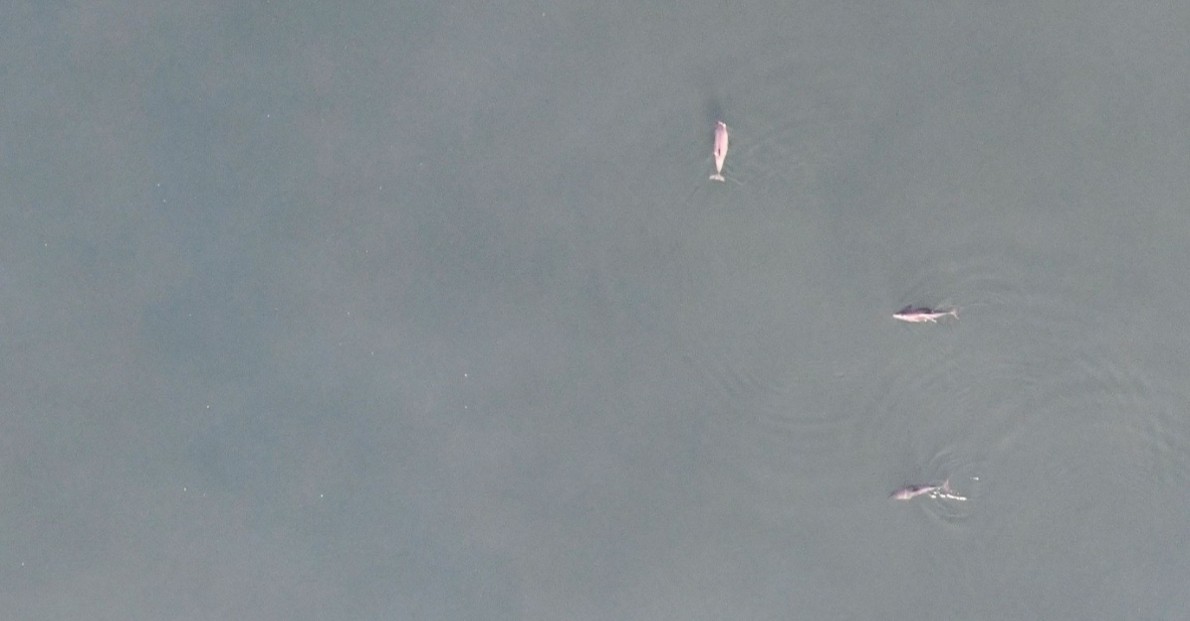
The Institute of Natural Sciences carried out marine mammal monitoring survey flights in March and June 2025. 95 and 40 harbour porpoises were observed respectively. Based on these observations, a scientific extrapolation method is applied to calculate the total number of harbour porpoises present in Belgian waters, leading to estimates of over 4000 and nearly 2000 individuals respectively. Furthermore, 11 and 13 seals were also seen during the two flights, respectively. In March, a bottlenose dolphin was also documented near the eastern offshore wind farm zone, the dolphin species that appears most frequently in Belgian waters.
The marine mammal surveys are carried out in the framework of large-scale construction activities in Belgian waters and in accordance with international obligations to protect marine mammals. The collected data are used to coordinate activities and take appropriate measures to minimize the negative impact of human activities as much as possible.
International missions
In August 2025, the Coast Guard aircraft carried out the annual international Tour d’Horizon mission within the framework of the Bonn Agreement. During this mission, marine pollution originating from offshore oil and gas platforms is detected in the central North Sea, covering Dutch, Danish, British and Norwegian offshore waters. The aircraft detected a total of 11 oil pollutions and 2 pollutions caused by other harmful liquid substances (noxious liquid substances, or NLS), which is a relatively low number compared with previous years. All 11 oil pollutions could be directly linked to an offshore platform. One of the NLS discharges could be linked to a ship, with the cause of the second pollution remaining unknown. All observations were systematically reported to the competent coastal state authorities for further follow-up in accordance with international procedures.
In September 2025, a five-day international campaign was carried out towards the ECA boundary near the western entrance of the English Channel, close to Brest (Brittany, France). During this campaign, emissions from 167 ships were monitored. Four ships were found not to comply with sulphur regulations and 12 ships showed excessive NOx emissions. The number of sulphur violations was low compared with previous years, most likely due to the large amount of rain and high humidity during the campaign, which caused sulphur to react with water to form sulphuric acid that could no longer be measured. All observations were reported to the competent authorities in France and to European port authorities. The measurements were also included in Thetis-EU, the European maritime inspection database.