
More than four years after the Russian invasion of Ukraine began, new research by the Institute of Natural Sciences identifies a significant increase in non-compliance with international ship emission regulations among shadow fleet vessels operating in the North Sea region. More specifically, the study indicates that shadow fleet vessels increasingly use non-compliant fuels, leading to elevated emissions of sulfur dioxide (SO2).
The North Sea is designated as an Emission Control Area (ECA) under regulations established by the International Maritime Organization (IMO). Within this maritime zone, stringent limits are imposed on sulfur and nitrogen oxide emissions from ships to improve air quality and safeguard marine ecosystems.
Compliance can be achieved by using fuel with a ‘fuel sulfur content’ not exceeding the prescribed limit of 0.1%. Non-compliance can be remotely determined using airborne monitoring measurements of ship exhausts.
Elevated non-compliance
The new study combines ten years (2015–2025) of airborne ship emission measurements collected by the Belgian coastguard aircraft with vessel tracking data from Automatic Identification System (AIS) and international sanctions databases. As the term “shadow fleet” is not uniformly defined, this study considers two categories of Russian-linked vessels: (1) formally sanctioned vessels and (2) vessels not subject to sanctions but trading with Russian ports or sailing under the Russian flag.
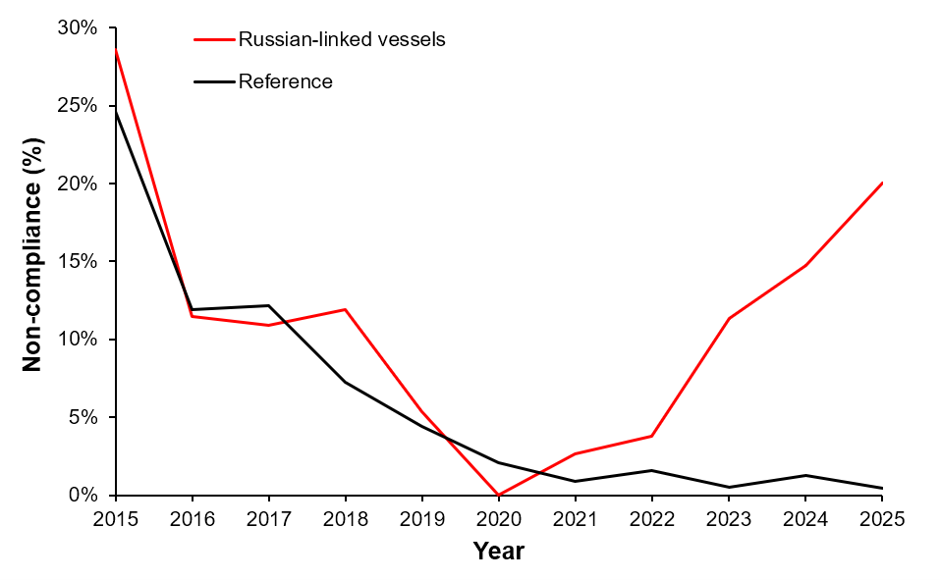
The results reveal a remarkable increase in non-compliance among Russian-linked vessels following the outbreak of the war in Ukraine in 2022. Prior to 2022, Russian-linked vessels exhibited compliance behaviour similar to the rest of the international merchant fleet. Following 2022, non-compliance among Russian-linked vessels increased significantly, reaching 14.8%, compared with only 0.7% for the reference fleet.
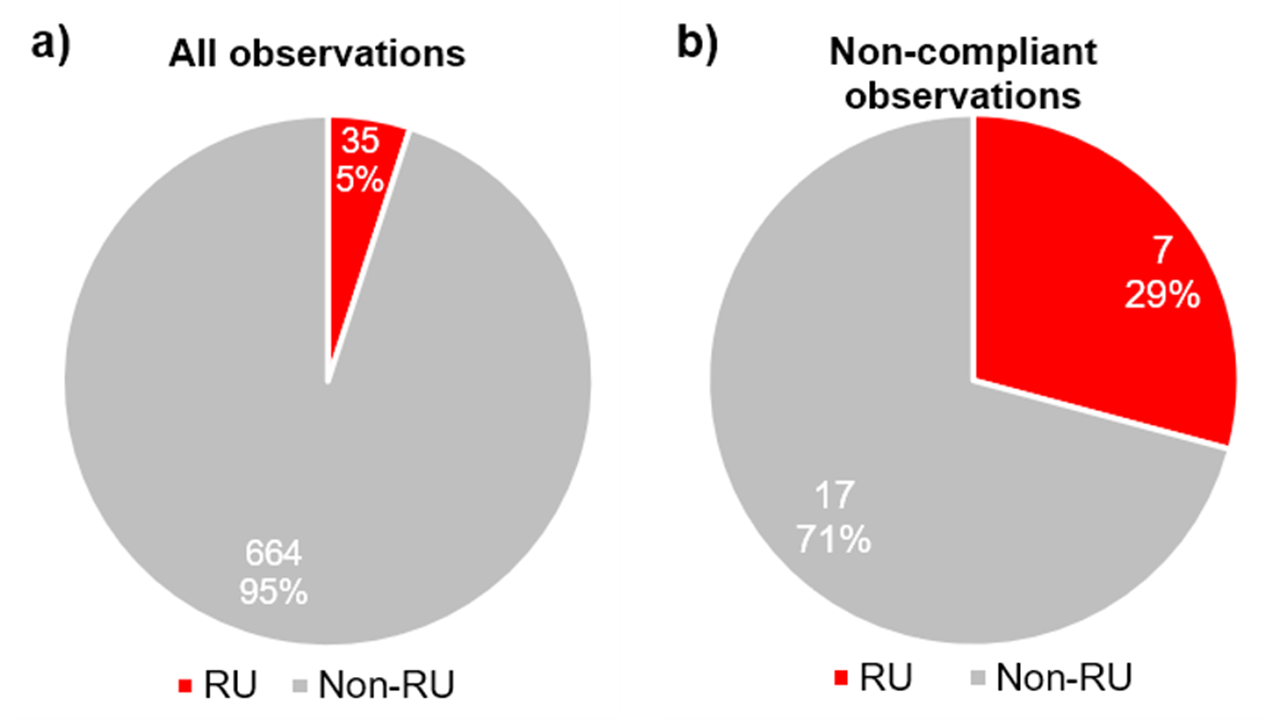
Although Russian-linked vessels represented only approximately 5% of all monitored vessels, they accounted for nearly 30% of all detected violations in 2025.
Shadow fleet characterisation
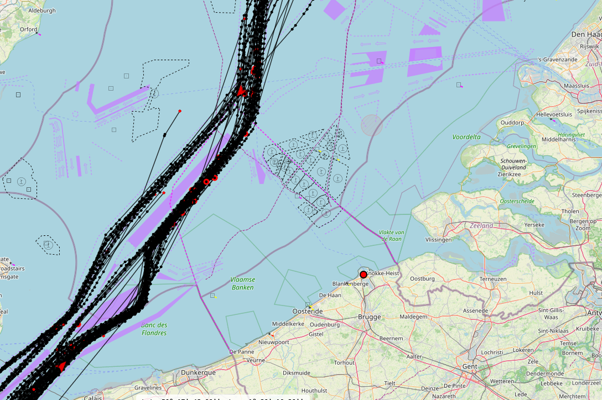
To better understand the presence of shadow fleet vessels in Belgian waters, the Institute of Natural Sciences developed an automated geofence system combining AIS vessel tracking with international sanctions databases. During the observation period, the system identified on average almost four sanctioned vessels and more than four additional Russian-trading vessels transiting Belgian waters each day.
The shadow fleet vessels observed in this study were generally old vessels, with an average age of more than 20 years. Such ageing vessels may pose a greater risk of technical failures and environmental incidents. Many of these vessels also operate without adequate insurance or even under false flag registrations, raising additional concerns about their accountability in case of incidents at sea. Their continuous presence in the Belgian part of the North Sea underlines the importance of continued monitoring and vigilance.
The higher average age of the Russian-linked vessels and their fuel use likely also explain another finding from the study: in addition to the increased non-compliance for sulfur emissions, black carbon emissions were also found to be significantly higher for Russian-linked vessels than for the reference fleet.
Enforcement challenge
The findings of this study highlight an important enforcement challenge. Many shadow fleet vessels transit European waters without calling at European ports and therefore largely avoid conventional port State control inspections. As a result, airborne remote sensing, combined with AIS-based intelligence gathering, provides an increasingly important complementary tool for identifying high risk vessels and supporting targeted enforcement actions.
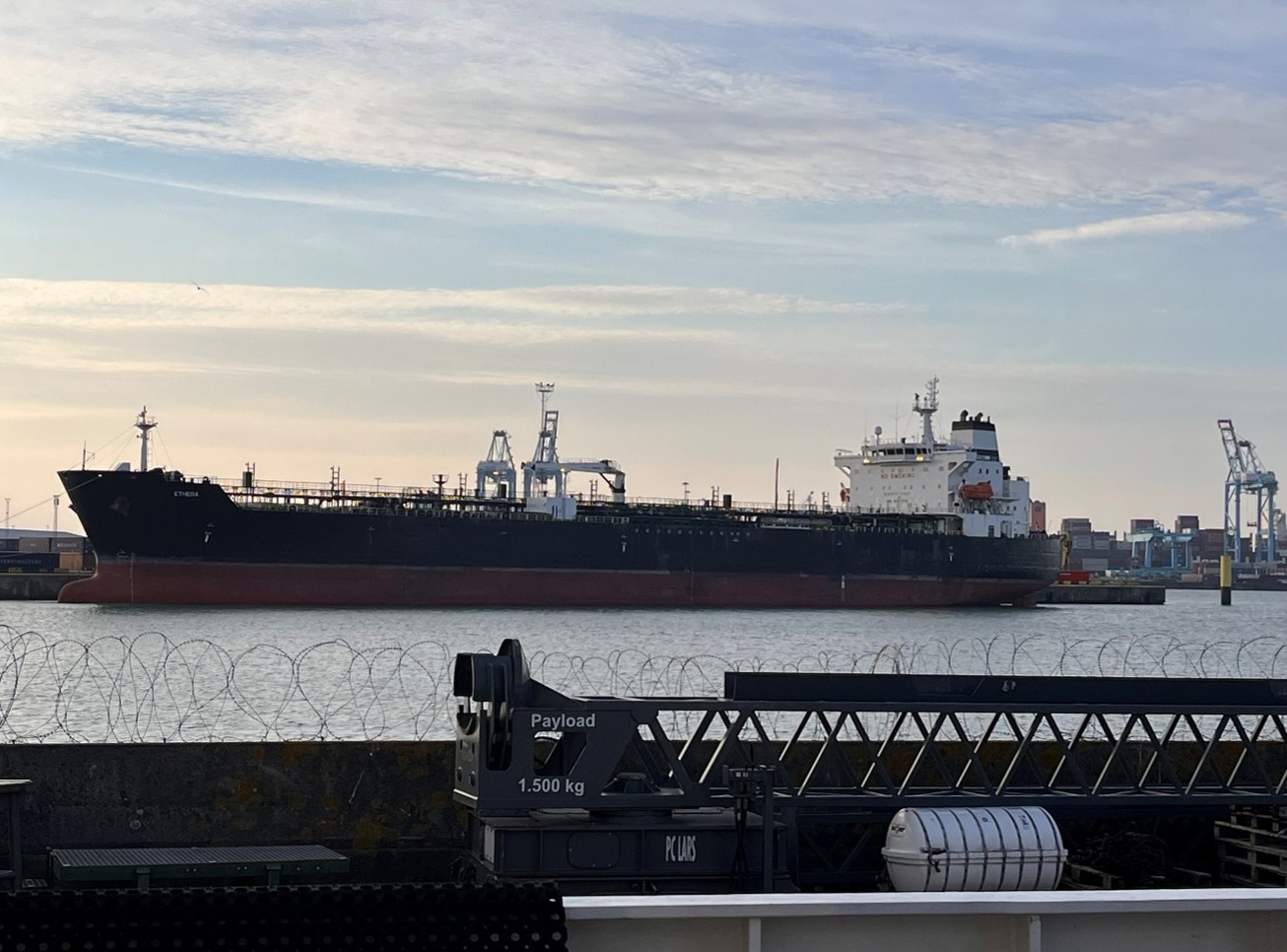
Recent actions by Belgian authorities and other European Member States, including the seizure of the MS Ethera in early 2026, illustrate the type of measures that may become increasingly important in addressing the environmental risks associated with shadow fleet activities.
The Institute of Natural Sciences remains committed to providing independent scientific expertise on maritime environmental issues. It has been pioneering airborne ship emission monitoring for more than ten years and will continue its monitoring efforts to support the protection of the marine environment in the North Sea.
Reference of the study (pre-publication, submitted for peer review):
Van Roy, Ward; Merveille, Jean Baptiste; Scheldeman, Kobe; Van Nieuwenhove, Annelore; D’hamers, Maan; Schallier, Ronny, Airborne Monitoring of Shadow Fleet Emissions in the North Sea ECA. Available at http://dx.doi.org/10.2139/ssrn.6956831